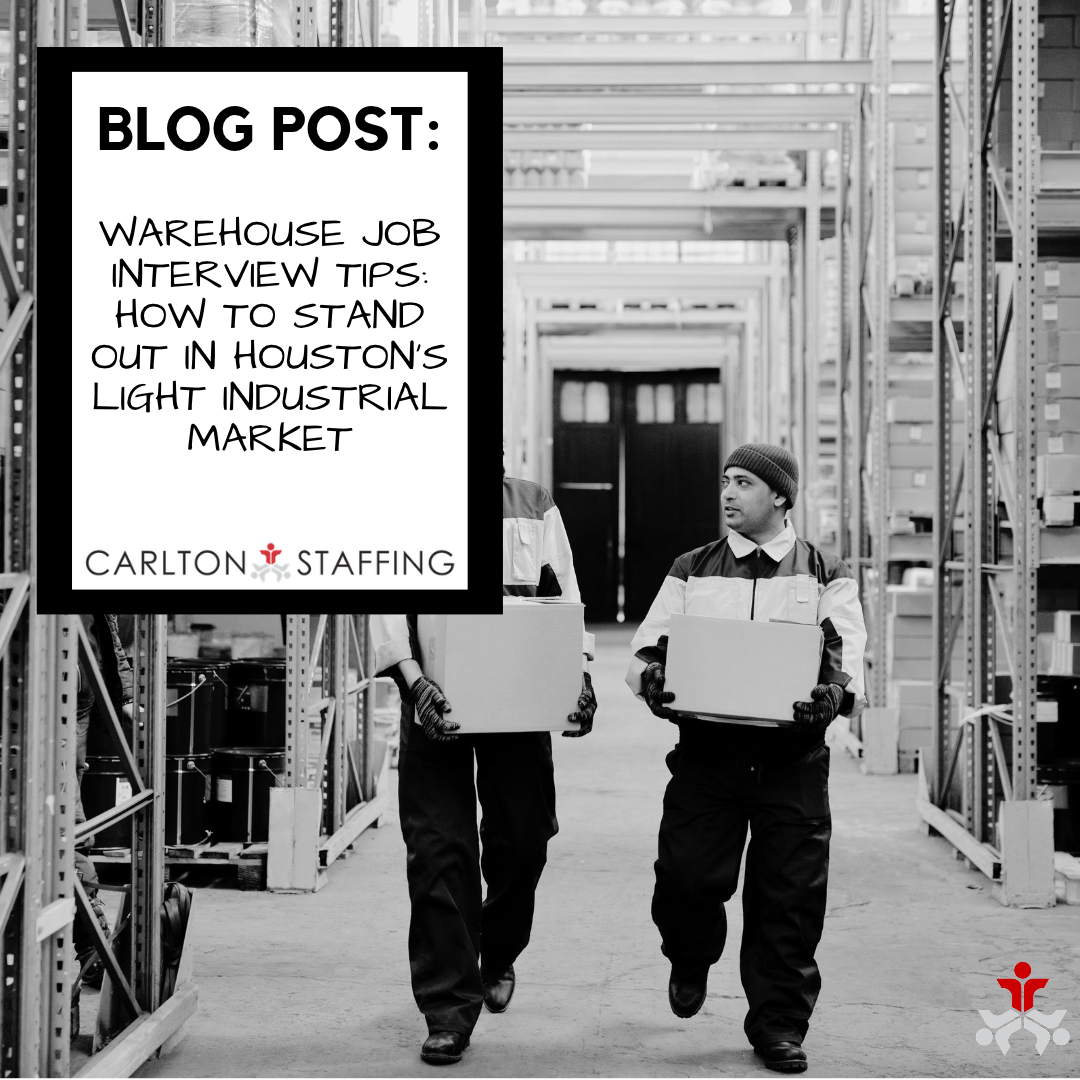
Warehouse Job Interview Tips: How to Stand Out in Houston’s Light Industrial Market
Looking for warehouse job interview tips that actually work right now? You are not alone. Houston’s warehouse, production, and distribution centers are hiring at a steady pace. Employers have also gotten pickier about who they bring on. One reason: candidates are skipping interviews and no-showing on day one more than ever. In 2025 SHRM Talent Trends research, 41% of employers said candidates ghosted them somewhere in the hiring process. That shift means simple reliability now sets you apart from the stack of other applicants.
Maybe you are applying for forklift, order selector, warehouse associate, or general production roles. The good news is that most of what hiring managers want has nothing to do with a polished resume. It mostly comes down to how you show up and how you follow through once you get the job. The interview itself is just one piece of that.
Why Reliability Beats a Perfect Resume
Light industrial hiring managers are not looking for a flawless work history. Many entry-level roles do not require a specific background at all. What they care about is simpler. Will you show up on time? Will you follow safety procedures? Will you stay through your shift?
Recruiters notice fast when a candidate is responsive. Answer calls and texts promptly. Keep your voicemail set up. Confirm your start date in writing if you can. These small habits tell an employer you are someone they can count on before you ever clock in.
Warehouse Job Interview Tips: What to Have Ready Beforehand
A little preparation goes a long way. These warehouse job interview tips start with what to have ready before you walk in.
Be ready to talk about your availability. Know which shifts you can work. Mention any scheduling conflicts you already know about. Bring a government-issued ID and any certifications you hold, such as a forklift card or OSHA 10 card. Write down the names of two or three past supervisors who can vouch for your work.
If your past jobs were in retail, food service, or construction, think through what actually transferred. That experience counts, even when the job title looks different on paper. Staying on your feet for a full shift and moving product all day are skills you already have. So is following safety rules while working as part of a team.
During the Interview: What to Say
Keep your answers specific. When a hiring manager asks about a time you handled a problem, walk through what happened. Explain what you did. Share how it turned out. A short, concrete story beats a vague claim about being a hard worker.
Ask a few questions of your own. Good ones include what a typical shift looks like and what training new hires receive. Ask about the most common safety hazard on that floor, too. Asking about safety signals that you take the role seriously. It also gives you real information about the workplace.
Confirm the practical details before you leave. Lock down your start date and start time. Make sure you know the exact location, too. Ask about the dress code and any required personal protective equipment. Showing up on day one without the right gear is an easy way to make a bad first impression.
Your First Two Weeks on the Job
Getting hired is only the start. Supervisors form a lasting opinion of you during the first two weeks. That opinion often decides whether a temporary assignment turns into something longer term.
Arrive ten to fifteen minutes early for every shift. Pay close attention during safety briefings. Ask questions if something is unclear. Pick one skill you want to learn in your first sixty days. It could be a new piece of equipment or a different station. Mention that interest to your supervisor directly.
If you are working through a staffing agency, stay in touch with your recruiter. Let them know how the assignment is going. Report any new certifications you earn. Flag scheduling issues as soon as you know about them. That relationship often leads to the next opportunity.
Finding the Right Opportunity
A strong interview only matters if it leads to the right fit. Spend a little time researching the company first. Learn what the specific role actually involves before you apply.
If you are searching for warehouse, production, or skilled trades openings in the Stafford and greater Houston area, Carlton Staffing keeps a running list of open roles at https://carltonstaffing.com/jobs/. Walk-ins are welcome at the Stafford office Monday through Friday from 8am to 5pm.
Interviewing for light industrial work does not require a perfect background. It requires showing up prepared and following through once you are on the floor. Clear communication matters at every step along the way. Keep those habits consistent and you will stand out in any hiring market.